 Background
Why clinical research needs people of every age and background
Read the guide
Access
Disability and access needs at study visits
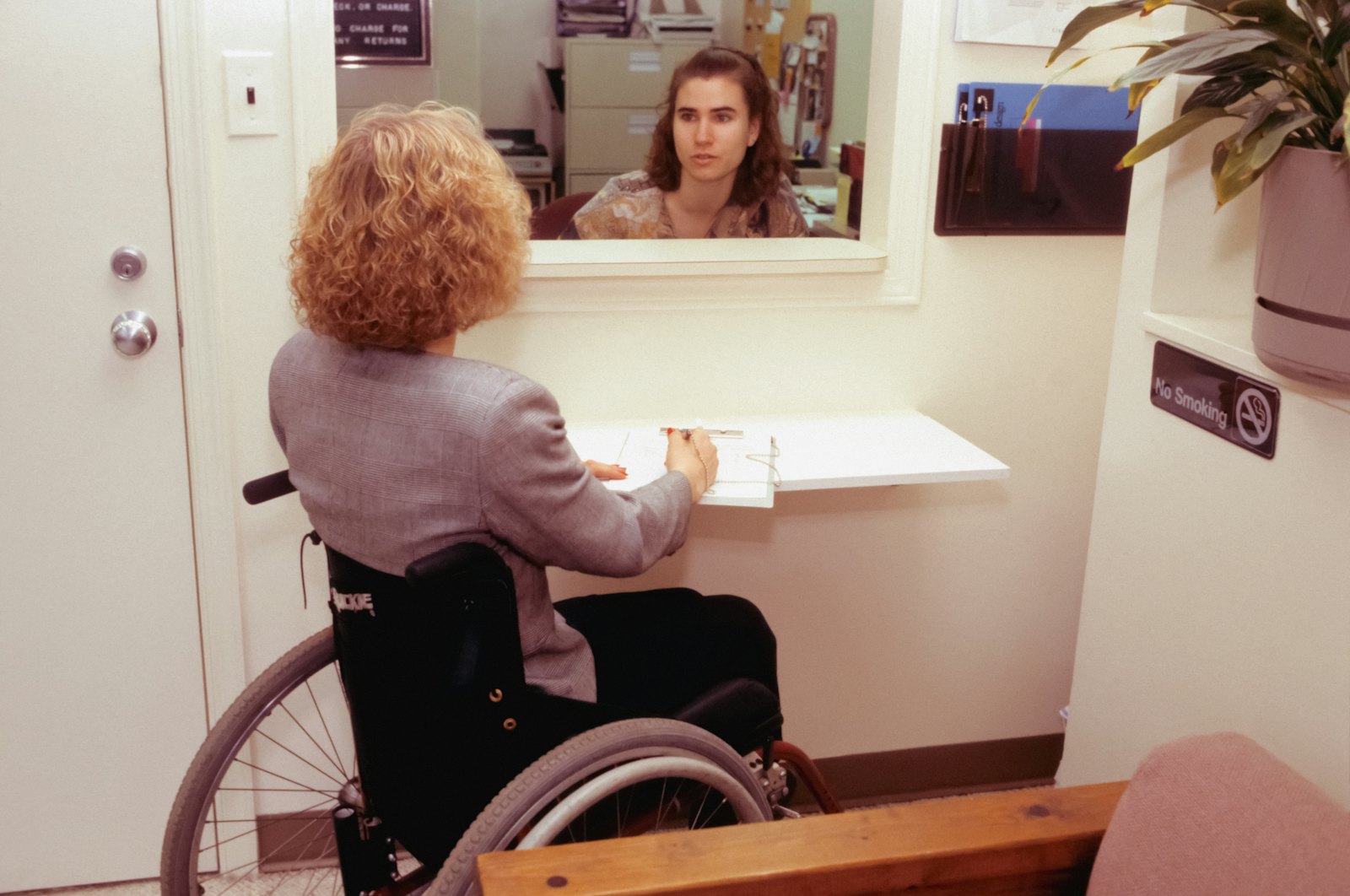
A study visit can mean parking, corridors, waiting rooms, scales, scanners and long forms. Saying what you need early gives the team time to make each step work for you.
Start with the whole visit
Think through a visit from leaving home to getting back. Where would you park or get dropped off? How far is the walk? Are there steps, heavy doors or long waits standing up? Will there be forms to read and sign?
Each of those points is something a study team can often plan around if they know in advance.
Things people commonly ask for
- Step-free entry and a lift to the right floor.
- A wheelchair waiting at the entrance.
- An accessible bathroom near the test rooms.
- Scales and exam tables that work from a wheelchair.
- A sign language interpreter or written notes.
- Large print, or forms read aloud.
- A quiet room and fewer people at once.
- Room for a support person or a service animal.
Tests that may need planning
Some tests assume you can stand, walk or lie flat for a while. If any of that is hard, ask how the test would be done for you, or whether there is another way to take the same measurement.
Asking is not a sign that you cannot take part. Teams want measurements that are accurate, and the right setup helps with that.
How to ask
Raise access needs at the first call and ask for them to be written into your visit notes. Repeat them when each visit is booked, and bring a short list on the day.
Questions to ask the study team
- 1Is the building step-free from the entrance to the test rooms?
- 2Can the tests be done from my wheelchair?
- 3Can my support person or service animal come with me?
- 4Who do I tell if something is not set up on the day?
Copy these, add your own, and keep the list by the phone for the first call.
This guide is general information. It is not medical advice, and it does not say whether any study would accept you. Talk to your own doctor about your health.
Keep reading
More guides for taking part.
Background
Why clinical research needs people of every age and background
Read the guide
 Language
Taking part in a study in a language other than English
Read the guide
 Age
Clinical trials for people 65 and over
Read the guide
Free, and easy to stop
Hear about research near you.
Pick an area of health and add your ZIP code for occasional research news from Kingsley Med, sent by email, with texts as an option.
Get updatesYour details stay with Kingsley Med
Rather talk to a person?
Ask a question about anything on this site.
Monday to Friday, 9am - 5pm EST