 Walking tests are common
Heart failure
Area 5 of 6
Hepatitis C research, with your privacy taken seriously.
Hepatitis C studies often involve blood tests and liver scans, and many people want to know who will see their results. Here is what visits can include and what to ask about privacy and support.
Blood tests and liver scansAsk who sees your results
What studies ask
What a hepatitis C study may ask of you.
Every study is different, and the consent form sets out exactly what one involves. These are the things that come up most often in this area.
- Blood testsTo measure the virus and check how the liver is working.
- A liver scanOften an ultrasound-style scan that measures stiffness.
- Daily tabletsIf the study involves a medicine, taken at set times.
- Follow-up visitsSome studies keep in touch for months after treatment.
- QuestionnairesAbout energy, mood and daily life.
- Your health historyIncluding other medicines and liver problems.
Support to ask for
Support worth raising at the first call
- Privacy
- A clear answer on who sees results and how they are stored
- Blood draws
- A clinician used to finding hard-to-reach veins
- Language
- An interpreter, and the consent form in your language
- Phone visits
- Follow-up calls by phone instead of a trip, where allowed
- Respect
- Care without judgment about how the virus was passed on
Overview
About hepatitis C, and its research.
Hepatitis C is a liver infection caused by a virus that spreads through contact with blood. Many people have no symptoms for years, so it is often found by a routine blood test. Over time it can scar the liver. Treatment exists, and testing is the first step to it.
Research in this area looks at simpler ways to test and treat, care for people whose liver is already scarred, ways to reach people who have never been tested, and liver health in the years after treatment.
Ask who sees your results
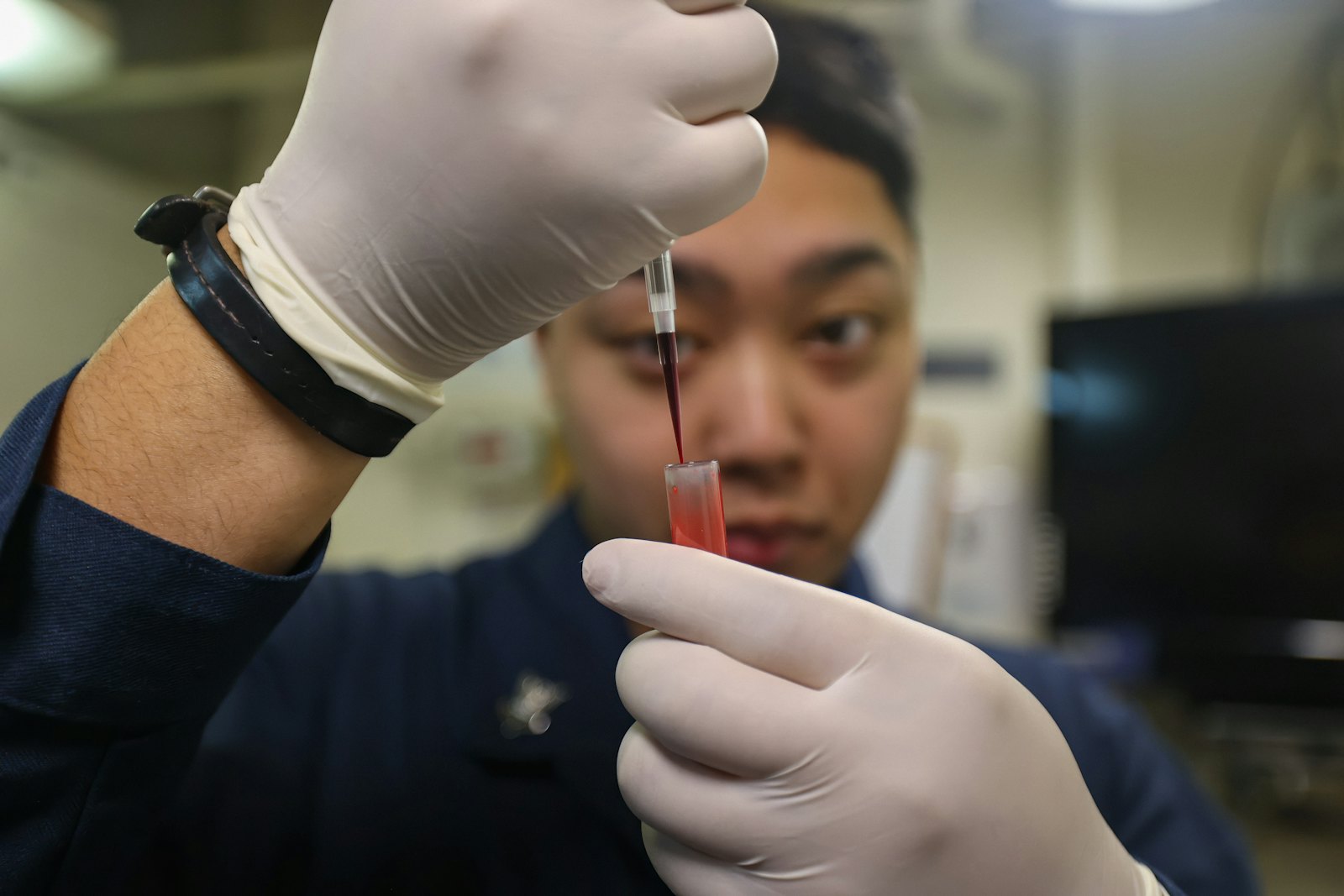
A small number of blood drawsEach visit usually needs a sample from the arm
Words you may hear
Three terms that come up in this area.
Study teams try to explain things simply, but some words appear on almost every form. Here they are in plain English.
Viral load
The amount of virus in a blood sample. Studies measure it before and after treatment.
Fibrosis
Scarring of the liver. Studies often grade it from mild to advanced.
Sustained virologic response
When the virus can no longer be found in the blood some weeks after treatment ends.
Other areas
More areas Kingsley Med covers.
Each one follows the same pattern: the condition, what studies ask, and the support to request.
All research areas
Walking tests are common
Heart failure
 Ankle and arm pressures
Peripheral artery disease
 Scans and bleeding diaries
Uterine fibroids
Hepatitis C questions
Hepatitis C, questions answered.
The questions people ask most about studies in this area.
Not on the list?
Our full FAQ covers support, texts and how Kingsley Med works.
Research teams in the United States must protect your health information. Ask who will see your results, whether anything is shared with your own doctor, and how your records are stored. You can ask for that in writing.
Some studies are for people who already know they have hepatitis C, and some look at testing itself. Each study sets its own requirements, and the team explains them at the first call.
Yes. Tell the team before the first visit. Staff who take blood every day can often use a smaller needle, warm the arm first, or let you lie down.
Sometimes. Some studies allow follow-up calls or video visits for questionnaires, with trips only for blood tests. Ask what the schedule looks like.
Free, and easy to stop
Hear about hepatitis C research near you.
The sign-up form opens with this area already chosen. Add your ZIP code and Kingsley Med will be in touch occasionally about research close to it.
Get updatesYour details stay with Kingsley Med
Rather talk to a person?
Ask a question about anything on this site.
Monday to Friday, 9am - 5pm EST